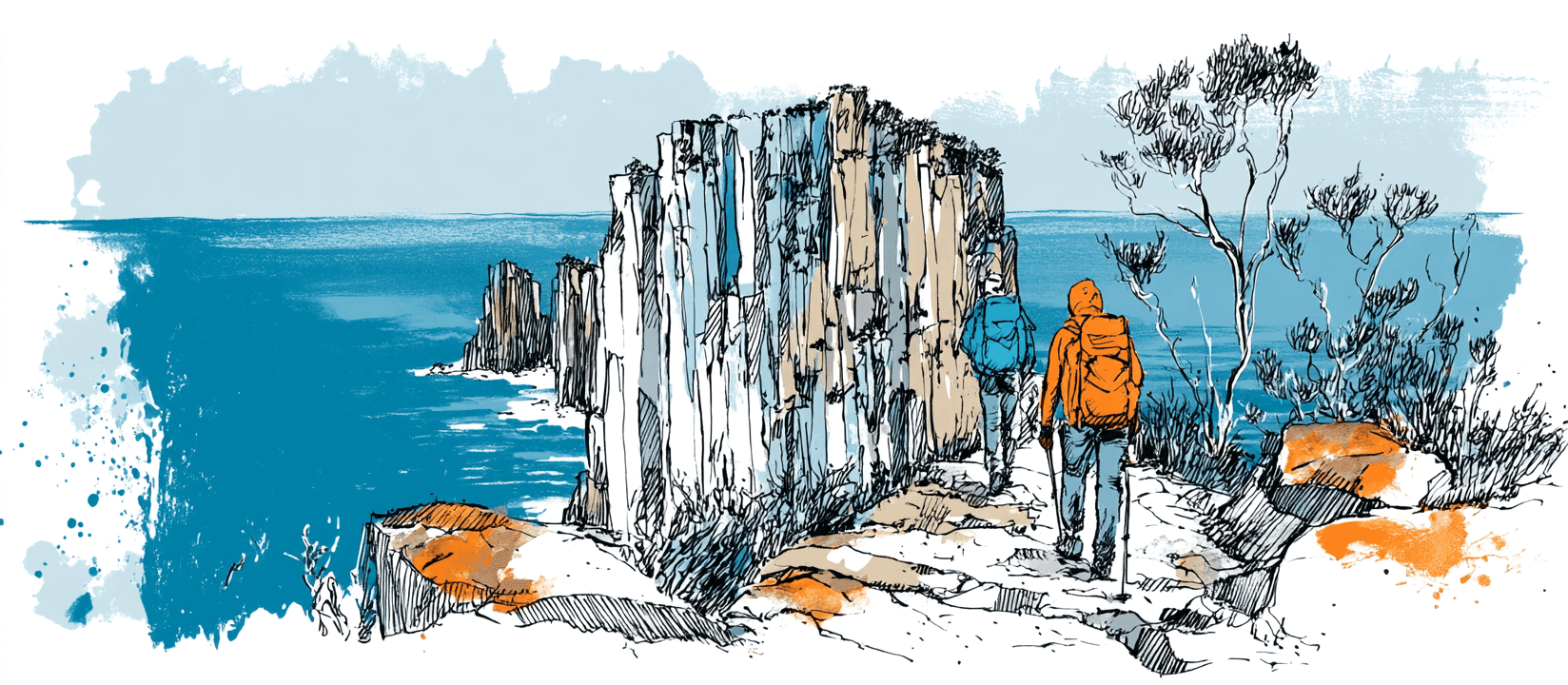
What to Pack for the Three Capes Track
The cabins carry the stove and pots. You bring the sleeping bag, the plate, and a jacket the capes can't get through.
Updated 6 Oct 2026
The trip you're packing for
The Three Capes Track is a 48 kilometre, four-day, three-night walk along the sea cliffs of the Tasman Peninsula. A boat from Port Arthur drops you on the beach at Denmans Cove, you walk one way past Cape Pillar and Cape Hauy, and you sleep three nights in cabins at Surveyors, Munro and Retakunna.
The cabins take the heavy stuff off your back. Each overnight site provides:
- Bunks with vinyl mattresses (no pillow)
- Self-igniting gas cooktops, pots, pans and kettles, plus basic kitchen tools like chopping boards, colanders and serving spoons
- Dishwashing liquid, a scourer and antibacterial soap
- Toilet paper, a clothesline and pegs
- Shared USB charging for phones and cameras
- Rainwater from tanks
- A heated communal hut for cooking and eating
That means no tent, no stove and no pots. Anything you eat off, sleep in or wear, you bring yourself. Parks Tasmania suggest a pack of around 50 litres that weighs no more than 12 kg including 2 litres of water. Days run up to 19 km with around 650 m of climbing, so every kilo counts by day three.
This is a more comfortable trip than a tent walk like the Wilsons Prom Southern Circuit, but the weather is not. Strong winds, rain and sea fog shape this coastline, often all in one day, so pack for them even if the forecast is clear.
What to wear
- Waterproof shell with a hood: a proper hard shell, plus waterproof overpants. The capes are exposed and the weather turns fast.
- Warm mid-layer for walking: a light fleece or merino jacket.
- Warm jacket for evenings: down, fleece or wool, even in summer. The sleeping rooms are insulated but unheated.
- Thermals: long-sleeve top and leggings in merino or polypropylene. Skip cotton and denim, which soak up water and leave you cold.
- Quick-dry walking shirt and trousers or shorts: zip-offs or pants that roll above the knee help at the Denmans Cove beach landing. Keep a towel near the top of your pack for it.
- Beanie, gloves, sun hat and sunglasses: you'll want all four, sometimes on the same day.
- Water-resistant hiking shoes or boots with sturdy soles: broken in, and tested with your loaded pack before you go.
- Camp shoes: thongs, sandals or crocs for the cabins.
- Spare socks, underwear, a shirt and warm long pants for the evenings.
What to bring
- Sleeping bag rated to -5°C, plus a liner: the cabins supply the mattress, not the bedding. Roll your spare clothes inside your jacket for a pillow, or bring a compact travel pillow.
- Head torch with spare batteries: there are no lights in the sleeping rooms.
- Your own plate, bowl, mug and cutlery: the kitchens supply pots, not place settings. Add a tea towel and a pocket knife.
- Food for 3 breakfasts, 4 lunches and 3 dinners, plus snacks and hot drinks. There are no shops on the track. Strip off packaging before you leave and pack food in snap-lock bags so nothing spills in your pack.
- A sturdy carry bag for your food, for moving it between the sleeping rooms and the kitchen hut.
- Water bottles or a bladder holding 2 litres, and a way to treat water. The cabin tanks hold rainwater, and Parks Tasmania advise treating it before you use it.
- A light day pack that packs down to fist size: on day three you can leave your main pack at the cabin and walk out to The Blade on Cape Pillar with just the essentials.
- Pack liner and dry bags: keep your sleeping bag and spare clothes dry even if the pack gets soaked.
- Rubbish bags: everything you carry in, you carry out, including food scraps and sanitary items.
- Toiletries, a travel towel, sunscreen and insect repellent: Tasmanian UV is fierce even on cool days. Munro has the only shower on the track.
- Toilet paper and a trowel for trackside emergencies between cabins.
- Ear plugs: you're sharing bunk rooms with strangers, and snorers can be loud.
- First aid kit and personal medication: blister care, a compression bandage and pain relief at a minimum.
- Photo ID, plus your concession card if you booked a concession pass (Australian Seniors, Health Care or Pension Card only).
Worth the weight
None of these are essential, but each earns its place on the right trip:
- Walking poles for the long descents
- Binoculars for albatross, sea eagles, whales and seals off the cliffs
- A thermos for a hot drink on a windy cape
- Bathers for the beaches at either end of the walk
- A camera with a USB cable or spare batteries, a book or a journal
Anything you don't need on the track can stay in luggage storage at Port Arthur and be collected when you finish. Phone reception is good on the first two days and patchier on day three, so download anything you want to read before you set off.
One last job before you pack: check, clean and dry your boots, poles and gear. The peninsula is free of many pests and plant diseases, and Parks Tasmania want to keep it that way. Use the boot wash stations at Denmans Cove and at the Cape Pillar junction on day two.
Tasmanian Parks send their own packing list with your booking. Check it against yours before you leave, since it's the final word.
If your dates are booked out
All of this assumes you have a departure. With only 48 walkers starting each day, the summer dates fill fast, but the track is rarely actually full. Plans change and cancellations come back all the time. They just vanish within minutes.
That's what we do. Spotbagger watches the Tasmanian Parks booking page often and alerts you the moment a spot opens on your date. Set up a watch on the Three Capes Track, and for the full picture on how the booking works and when spaces reappear, read Three Capes Track booked out?
Itineraries in this guide
Can't get a booking?
We'll watch for you.
Spotbagger checks the booking page often. The moment a spot opens, we'll tell you.