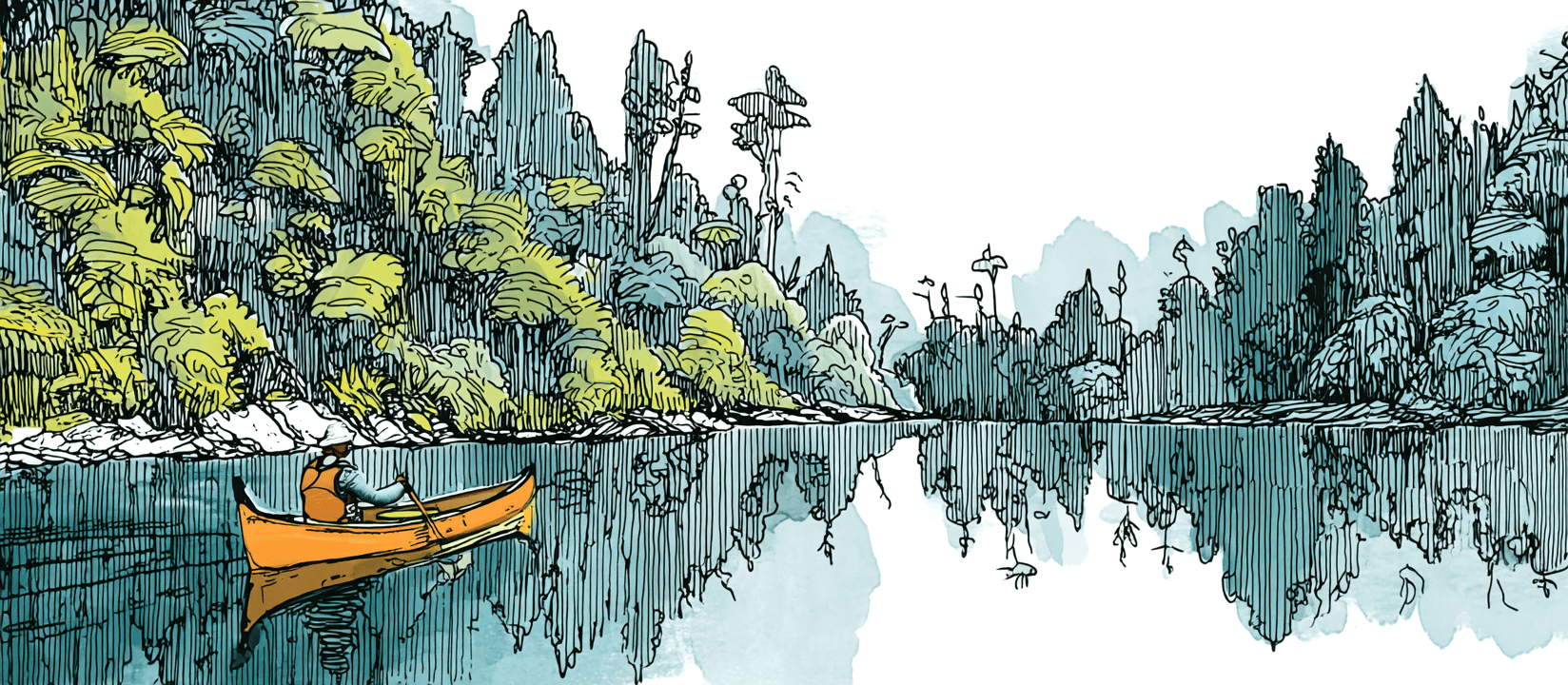
Whanganui Journey
New Zealand's Great Walk you paddle, not walk, down a river through the heart of the North Island
- Trip style
- Fixed itinerary
- Booking season
- Oct – Apr
- Length
- 87 km or 145 km
- Duration
- 3 or 5 days
- Craft
- Canoe or kayak
- Direction
- Downstream, one way
- Permit
- Hut and campsite booking required
Track booked out?

Live availability
Many dates availableMost dates have room right now. Checked 2 hours ago.
About the journey
The Whanganui Journey is the odd one out among New Zealand's Great Walks: you don't walk it, you paddle it. It follows the Whanganui River as it winds down through Whanganui National Park in the middle of the North Island, a river the local iwi regard as an ancestor and which, in 2017, became the first river in the world granted the legal status of a person. For three or five days you travel by canoe or kayak, deep in a steep-sided gorge of native bush, well away from any road.
It is a river of quiet reaches and gentle rapids rather than white water. Between the flat, mirror-calm stretches there are around two hundred small rapids, most of them easy grade-one and grade-two riffles that are more fun than fearsome. In between you drift under towering papa cliffs draped in fern, past the famous Bridge to Nowhere, and camp on riverbanks where the loudest sound at night is the water and the ruru. No paddling experience is required for the popular section, only a willingness to get wet and to camp.
Permits and the booking situation
Through the Great Walks season the river's huts and campsites must be booked in advance, and your booking is your trip: a bunk or a tent site for each night you are on the water. There are three huts, at Whakahoro, John Coull, and Tīeke Kāinga (a living marae where you are welcomed on), and a string of campsites in between, so most journeys are a mix of the two.
The two most sought-after nights are the huts at John Coull and Tīeke Kāinga, and in the busy summer stretch they book out. Both the classic three-day trip from Whakahoro and the full five-day trip from Taumarunui hinge on those same two huts falling on consecutive nights, so a popular date can look sold out months ahead.
Here's the thing though: the river is rarely actually full. Plans change constantly. River levels can be too low or too high, canoe-hire operators juggle their fleets, groups lose a paddler, and bookings get cancelled and rebooked all season long. Because a full trip needs its nights to line up back to back, a single freed bunk can quietly reopen a date that has looked booked out for weeks.
If the journey looks full, it's worth watching. That's what Spotbagger does: we check the DOC Great Walks booking page often and alert you the moment a complete trip opens up for your party, so you can grab it before anyone else sees it.
Seasons and conditions
The Great Walks season runs from October to April, and that is the only time the huts and campsites are booked. It's also the sensible time to paddle: warmer water, longer days, and the settled spells that make the flat reaches a pleasure. Outside the season the sites revert to first-come, first-served, there is nothing to book, and the river becomes a serious, cold-water proposition for very experienced paddlers only.
Even in season the river sets the pace. It rises fast after rain in the ranges, and high, discoloured water is a reason to wait a day rather than push on; low water late in summer can mean more of the gravel-bar dragging and less of the drifting. Canoe-hire operators watch the levels daily and will delay a launch when the river is up, so build a little slack into your plans.
Huts and campsites (and the order of the nights)
The journey runs one way, downstream, so your nights fall in order from your put-in to Pipiriki. On the three-day trip from Whakahoro you stay at John Coull Hut, then Tīeke Kāinga, before taking out at Pipiriki on the last morning. On the five-day trip from Taumarunui you add two nights up top, typically a riverside campsite such as Ōhinepane and then the Whakahoro Bunkroom, before the same two huts lower down.
The huts have bunks with mattresses, a water supply, and toilets, but no cookers, no power, and no showers, so you carry your own stove and fuel. The campsites are simpler still: a cleared terrace above the water, a toilet, and a tap or the river. Everything you bring travels in the watertight barrels the hire operators supply, which double as your dry store and your seat.
Gear essentials
The canoe hire covers the big items, but the river tests your packing more than your paddling. The short list:
- Watertight barrels: supplied with most hire; everything that must stay dry goes inside, sealed, every day
- Quick-dry clothes and a warm layer: you will be wet from the waist down; cotton is miserable, wool or synthetic is not
- Rain jacket: a proper waterproof shell for the days the sky joins in
- Camp stove and fuel: the huts have no cookers, so you must carry your own
- Sleeping bag and mat: the huts have mattresses but no bedding; campers need a tent as well
- Sun protection and insect repellent: the gorge is bright on the water and the sandflies are keen at dusk
DOC and the canoe operators both publish detailed lists; read them before you seal the barrels.
Getting there
The journey is one-way and remote at both ends, so transport is part of the plan and almost everyone books it through a canoe-hire operator. The three-day trips start at Whakahoro, reached by a long gravel road inland from Raetihi or Owhango; the five-day trips start further up at Taumarunui, on the main road and rail line in the central North Island. Both journeys take out at Pipiriki, downstream, where operators meet paddlers and shuttle them and the boats back to the start.
Because everything funnels through a handful of operators and two small settlements, it pays to line up your canoe hire, your transport, and your hut and campsite nights together once your dates are confirmed, especially for the summer holidays.
Common questions
Do I need paddling experience for the Whanganui Journey?
Not for the popular sections. The river is mostly flat water broken by small, easy rapids, and canoe operators give you a briefing before you launch. A reasonable level of fitness, a head for camping, and a willingness to get wet matter more than paddling skill.
The Whanganui Journey huts are full. Can I still get a spot?
Often, yes. Cancellations trickle back all season, and because a trip needs its huts on consecutive nights, one freed bunk can reopen a date that's looked sold out for weeks. Set up a watch and we'll alert you the moment a full trip opens for your party.
How many days is the Whanganui Journey?
Most people paddle either the three-day trip from Whakahoro to Pipiriki (about 87 km) or the full five-day trip from Taumarunui to Pipiriki (about 145 km). Both finish at Pipiriki and both rely on the John Coull and Tīeke Kāinga huts.
When can I book the Whanganui Journey?
The huts and campsites are bookable for the Great Walks season, roughly October to April. Outside those months the sites are first-come, first-served and the river is only for very experienced cold-water paddlers, so there's nothing to book and nothing to watch.
Guides for this track
When do Great Walks and Overland Track bookings open? 2026/27 season dates
Booking-release dates for the Overland Track, NZ Great Walks, Parks Victoria and more, plus what to do when your date sells out in minutes.
NZ Great Walks sold out? How to still get a hut for the 2026/27 season
The popular NZ Great Walks book out the morning they open. Here is why, which ones go fastest, and how to still land a hut through cancellations.
Other tracks we watch
Overland Track
Cradle Mountain–Lake St Clair National Park, Tasmania, Australia
Three Capes Track
Tasman National Park, Tasmania, Australia
Milford Track
Fiordland National Park, Southland, New Zealand
Routeburn Track
Mount Aspiring & Fiordland National Parks, Otago & Southland, New Zealand
Kepler Track
Fiordland National Park, Southland, New Zealand
Heaphy Track
Kahurangi National Park, Nelson Tasman & West Coast, New Zealand
Tongariro Northern Circuit
Tongariro National Park, Central North Island, New Zealand
Paparoa Track
Paparoa National Park, West Coast, New Zealand
Rakiura Track
Rakiura National Park, Southland, New Zealand
Abel Tasman Coast Track
Abel Tasman National Park, Nelson Tasman, New Zealand
Hollyford Track
Fiordland National Park, Southland, New Zealand
Frenchmans Cap
Franklin–Gordon Wild Rivers National Park, Tasmania, Australia
Walls of Jerusalem
Walls of Jerusalem National Park, Tasmania, Australia
Federation Peak
Southwest National Park, Tasmania, Australia
Western Arthurs
Southwest National Park, Tasmania, Australia
Mount Anne
Southwest National Park, Tasmania, Australia
Lake Rhona
Franklin–Gordon Wild Rivers National Park, Tasmania, Australia
Eastern Arthurs
Southwest National Park, Tasmania, Australia
Wilsons Prom Southern Circuit
Wilsons Promontory National Park, Victoria, Australia
Wilsons Prom Lightstation
Wilsons Promontory National Park, Victoria, Australia
Can't get a booking?
We'll watch for you.
Spotbagger checks the Whanganui Journey booking page often. The moment a spot opens, we'll tell you.